
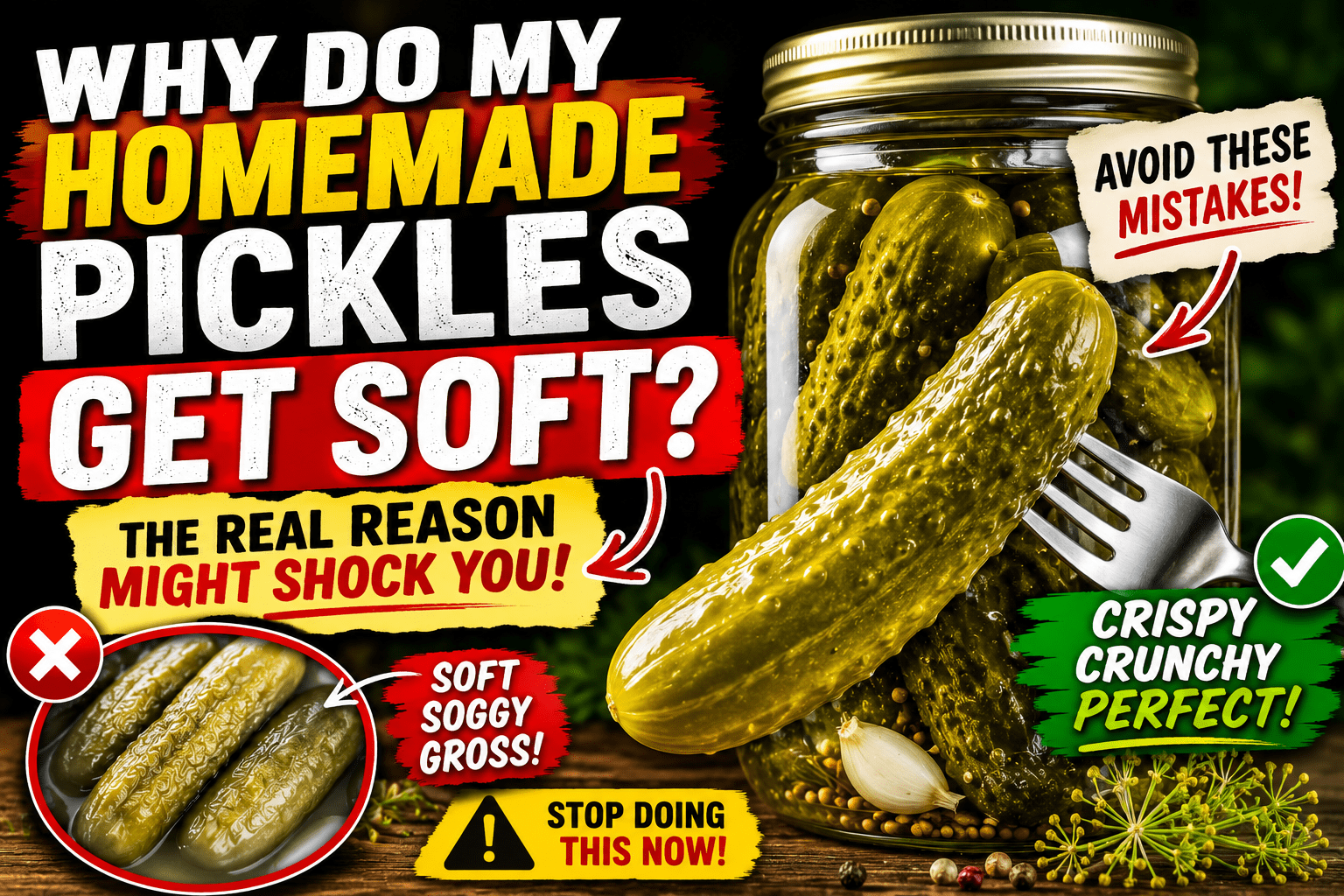
Why Do My Homemade Pickles Get Soft?
Many people say that their homemade pickles don’t get crunchy, they are always soft.
Why do my homemade pickles get soft? It is mainly due to poor brine balance, wrong cucumbers, over-processing or freshness. Use the appropriate ingredients, canning techniques and storage procedures to maintain cucumber crispness.
Let’s take a look at some common pitfalls so you can make crunchy and delicious pickles every time.
Why do my homemade pickles get soft?
The most frequent pickle-making issue is the softness of the pickles. Cucumber will get mushy and floppy after two days or so, instead of being crisp and hard. This is typically caused by problems with the preparation, fermentation or storage.
The good news is that:
To overcome the soft pickle problem, take care of the following pickling methods:
Using Old or Overripe Cucumbers
Fresh cucumbers are most important for making crisp pickles. Old, big, and overripe cucumbers are naturally watery and the flesh is soft making them soft pickles.
The following are the characteristics of poor quality pickling cucumbers:
- Yellow color skin
- With Large inside seeds
- The soft spots or wrinkles.
- These are thick and large cucumbers
To get the best and crunchiest pickles, use small cucumbers within 24 hours of picking or buying them.
Not Removing the Blossom End
The most frequent cause is the presence of enzymes in the blossom end of cucumbers which soften pickles during storage. If this little piece is not cut off before pickling, the pickles will become soft.
How to fix:
Cut off 1/16 inch from the blossom end of the cucumber before packing. This is a quick and easy way to keep pickles crunchy and crisp for a long time.
Weak Brine Solution
It is important to have the correct proportions of vinegar, salt and water when pickling. Weak brine causes pickles to be soft because it does not preserve cucumbers.
Common brine mistakes:
- Too much water
- Less vinegar
- Including additives to table salt.
- Incorrect recipe measurements
Always follow a trusted pickling recipe and use the proper proportions of salt, water and vinegar for the brine.
Using the Wrong Type of Salt
Some people use table salt, but it can contain anti-caking agents and iodine which can affect the clarity and texture of pickles.
Best salts for pickling:
- Pickling salt
- Kosher salt (no additives)
- Sea salt for canning purposes.
The right salt enhances flavor and helps to make pickles firm.
Over processing During Canning
If jars are heated for a prolonged period of time in the water bath canning process, cucumbers can become soft. When the temperature is too high, it will destroy the structure of the cucumber and deprive it of crispness.
The following are some tips for avoiding over-processing:
- Follow the accurate canning times.
- Do not heat for extended periods of time.
- Follow the recommended jar sizes in the recipes.
Pickle texture and flavor is maintained in careful processing.
Fermentation Problems
Fermented pickles tend to get soft at high temperatures. Additionally, unwanted bacteria in the brine are caused by soft fermented pickles.
Ideal fermentation conditions:
- Cool room temperature
- Wash jars and utensils
- Fully submerged cucumbers
- Proper salt concentration
In a too-warm environment, the pickles may rapidly soften.
Hard Water Can Affect Pickles
One another reason is hard water minerals which sometimes interfere in the pickling process and reduce the crunch and crispness.
Always use filtered or distilled water to prepare brine for pickling. This improves texture and appearance as well as crispness.
The absence of the ingredients for crisping
The crispy pickles needed some natural crispness agents to keep them crisp and flavourful. Lake of these ingredients can cause soft pickles.
Popular crisping ingredients:
- Grape leaves
- Calcium chloride
- Oak leaves
- Horseradish leaves
These ingredients help to retain the crunch without altering the taste of pickles.
Improper Storage Conditions
It is most important that the pickles be stored properly since perfectly made pickles can become soft if stored improperly.
Storage tips:
- Keep the jars in a cool and dark place.
- Refrigerate after opening
- Avoid direct sunlight
- Properly store sealed jars
The pickle can become soft over time from heat and direct sunlight.
Are soft pickles OK to eat?
Typically, the soft pickles are safe to eat if they are well prepared and stored. Do not eat them if you notice mold, smell something bad, feel that the jar is slimy, or hear popping sounds from the sealed jars.
When you are in doubt, it is better not to consume them.
Best Tips to Keep Homemade Pickles Crunchy
Here are some of the best tips to make crunchy and crispy homemade pickles:
- Always use fresh cucumbers.
- Remove the blossom end of cucumber.
- Use the accurate vinegar-to-water balance.
- Choose proper pickling salt
- Avoid overheating jars
- Store pickles properly
- Add natural crisping ingredients
- Use clean equipment and avoid from bacteria.
With these easy tips, you can enhance the texture of pickles.
Conclusion: