
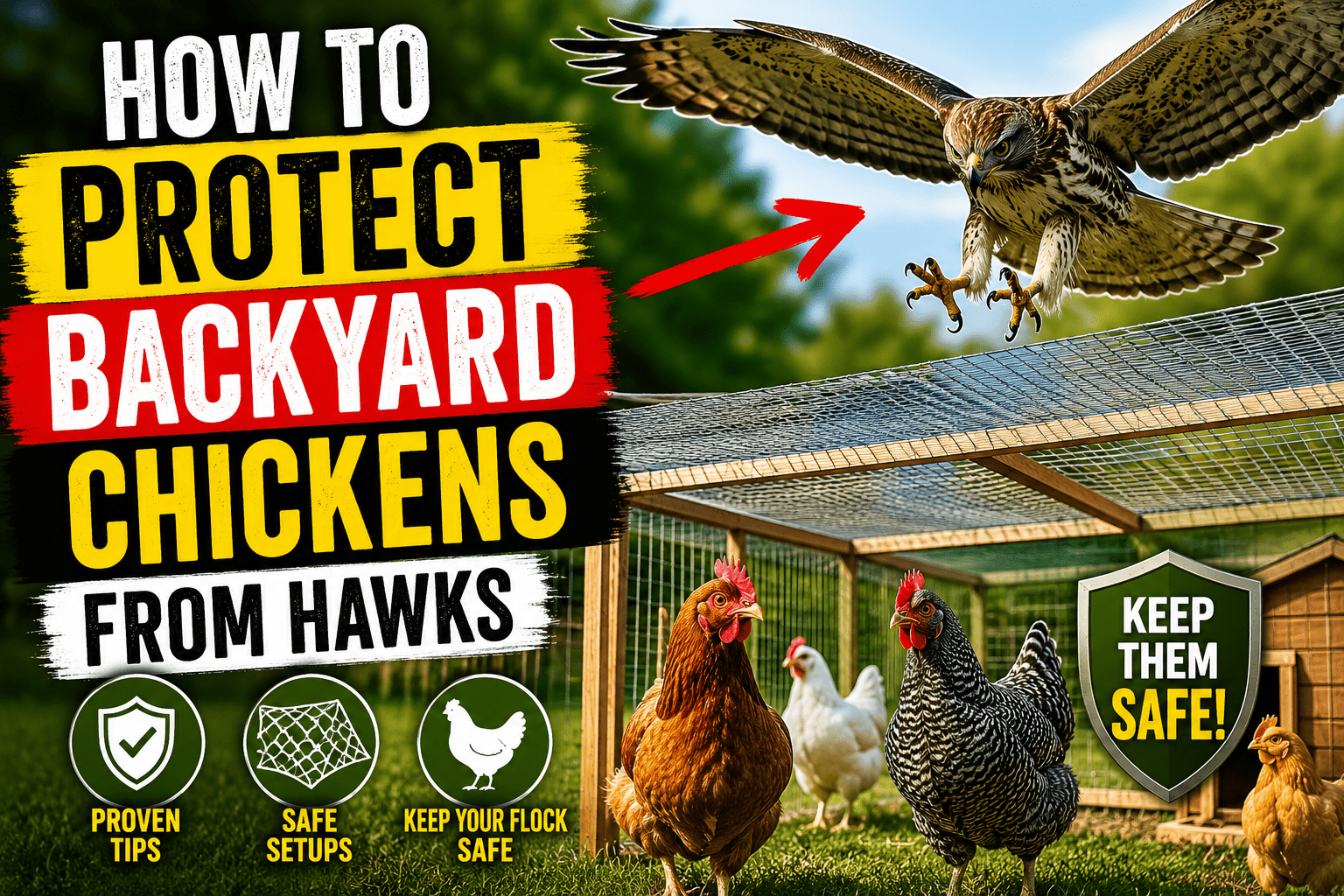
How to Protect Backyard Chickens from Hawks?
There are many threats to backyard chickens, one of the most common being hawks. If you are searching how to protect backyard chickens from hawks, here is a complete guide for you.
Shelter and other simple measures work well in protecting backyard chickens. Hawks are very sharp-eyed and can easily spot any chicken that’s out in the open with no cover to protect it. Good shelter, deterrents, and flock management lower the risk of hawks attacking and create a safer environment for your birds.
Why Hawks Target Backyard Chickens
Hawks are natural predators with keen eyes and strong claws, so they catch their prey well. This means that when chickens are in open spaces, especially the smaller breeds and the young ones, they are easy pickings for them.
Some of the things that might attract hawks to your yard include:
- No overhead protection
- Open feeding areas
- Small or young chickens
- Little or no vegetation and hiding spots
- Frequent hawk activity in the area
Knowing why hawks are drawn to your flock is the first step in preventing potential attacks.
How to Protect Backyard Chickens from Hawks with Covered Runs
A simple and effective way to keep your chickens safe is to add something overhead for protection.
Install Poultry Netting
Poultry netting acts as a barrier that keeps hawks away from your chickens. It still lets in sunlight and fresh air, but stops predators from getting in.
Use Wire Mesh Roofing
For the best protection, you can cover your chicken run with hardware cloth or welded wire mesh. These materials last a long time and keep your flock safe.
Cover Small Free-Range Areas
If your chickens like to roam, set up special areas with netting above them. This helps protect them from hawks and other birds of prey.
Protect Chickens from Predators and Other Threats
Chickens always have a tendency to hide whenever they feel any kind of threat. It is important to provide hiding spaces for them so that they can remain safe from hawks.
Ways to Accomplish This:
- Plant shrubs and bushes
- Install portable shelters.
- Use trees for protection.
Dense Shrubs and Bushes
Dense shrubbery gives chickens a place to hide from predators, helping them evade capture.
Portable Shelters
You can create instant shelter with wooden pallets, small sheds, or lean-tos.
Trees
Trees will protect chickens from aerial predators as well. They will also provide shade and act as a visual barrier to hawks.
Place Hawk Deterrents in the Backyard
Visual and physical deterrents set around the property line help keep hawks away from the backyard and other areas of the property where your birds are kept.
Reflective Objects
Old CDs, reflective tape, and shiny pinwheels will reflect light, which may prove uncomfortable for the hawks.
Motion-Activated Devices
You can also use motion-activated sprinklers or lights that automatically turn on to scare predators and keep them at a distance from your birds.
Regularly Rotate Deterrents
This is because hawks can get used to seeing one spot stay the same, so rotating them will keep them effective.
Supervise Free-Range Time
Chickens enjoy a better quality of life when they can roam freely. Just keep an eye on them while they are out.
Let Chickens Out During Safer Hours
Try to limit their free-range time when there is a higher risk from predators.
Being nearby helps scare off hawks
Hawks usually avoid places where people or other animals are present.
Safety in numbers
Birds that are alone are more likely to be targeted by hawks.
Add Natural Guardians to Protect Your Flock
Many chicken keepers use guardian animals to deter predators.
Roosters
A good rooster will always give the alarm, and the hens will learn to take cover quickly.
Livestock Guardian Dogs
Certain breeds of dogs can be trained to protect poultry and discourage predators.
Other Protective Animals
Some flock owners consider geese as effective watchdogs because they raise an alarm by honking loudly when a threat appears.
Keep a Hawk-Safe Chicken Yard
Good management will always prevent hawks from making their attacks. Keep the grass short, check your fences, and get rid of anything that might attract hawks and other wildlife. Watch for hawks and change your strategy if needed. Using several protection methods works best.
Conclusion
Learning how to protect backyard chicken from hawks will keep your hens safe and not give the hawks any advantage over your birds. Methods that could be applied include using covered runs, overhead netting and hiding places, as well as setting various types of deterrents.
Free-ranging must be supervised to minimize the chickens’ vulnerability to such threats. Another comprehensive measure may involve using guardian animals, such as dogs or certain breeds of geese that are hostile to these aerial predators.
A secure environment and proactive efforts will allow the chickens to move about and have fun outdoors, with less threat from hawks and safety assured.