
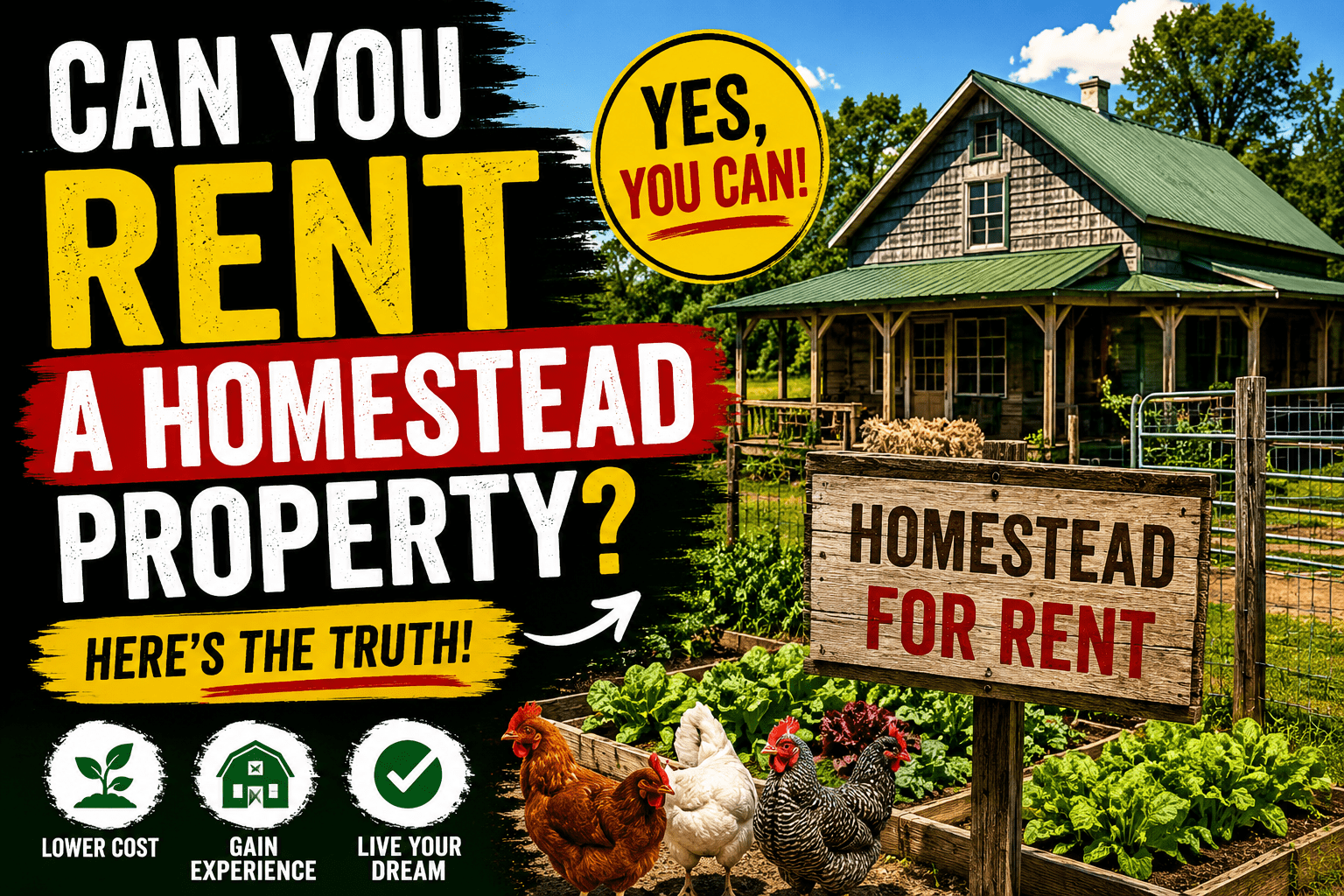
Can You Rent a Homestead Property? Avoid These Costly Mistakes First
Many people interested in rural living or seeking self-sufficiency often wonder whether they can rent a homestead instead of buying one. The good news is that in most places it is possible to do so.
Whether you want to raise chickens, grow vegetables, or enjoy homesteading, renting can be an affordable way to get started without the financial burden of buying land.
Can you rent a homestead property? Yes, you can, rent a homestead property, as many landowners lease farms, rural homes, and homestead-ready properties. However, the rental agreements should explicitly allow for gardening, keeping livestock, and other homesteading practices.
Can You Rent a Homestead Property Legally?
In most regions, renting homesteading property is permitted. Landlords often offer rural properties, small farms, and agricultural land to those interested in a homesteading lifestyle.
Consider the following before signing a lease:
Start by checking with local zoning regulations to ensure clarity. Once you have a green signal for agricultural use, review any livestock restrictions. Next, make sure you understand the rights to gardening and farming. Finally, research detailed requirements for building and fencing permissions.
A written rental agreement helps prevent misunderstandings between the landlord and tenant. It can spare confusion and keep things clear. With it, both sides know what’s expected, what costs apply, and what happens if something goes wrong. In short, a document like this helps things run smoother.
Benefits of Renting a Homestead Property
A big benefit for new homesteaders is that renting a homestead property usually costs less upfront.
Lower Upfront Cost
Buying rural land can be expensive. Renting lets you start homesteading without needing a large down payment or a mortgage, so it is easier to get started.
Test the Homesteading Lifestyle
If you are not sure if homesteading is right for you, renting gives you a chance to try it out and see what is involved before you buy your own place.
Access to Existing Infrastructure
Some homestead rentals already have things like barns, fences, gardens, animal shelters, and water systems. Having these in place can save you time and money, so you can focus on your homesteading goals.
What to Look for When Renting a Homestead Property?
Not every rural rental is right for homesteading. Take time to look over the property closely before you decide.
Land Size and Quality
Think about how much land you will need for the following:
- Gardening
- Fruit trees
- Livestock
- Composting
- Storage
Be sure to check the soil quality and how well the land drains.
Water Availability
You will need a steady water supply for your crops, animals, and everyday needs. Find out if there are wells, irrigation systems, and what water rights come with the property.
Homesteading Permissions
Some landlords might not allow certain activities, such as:
- Chickens
- Goats
- Beekeeping
- Greenhouses
- Permanent structures
Always get any permission in writing.
Can You Start a Homestead Farm While Renting?
Yes, in many cases, you can farm while renting a homestead property. As a tenant, you may grow organic vegetables, raise backyard chickens, or manage small livestock.
However, your ability to homestead on a rental property depends on several factors:
- Lease agreement terms
- Homestead property size
- Local farming regulations
- Landowner or landlord approval
Discuss your homesteading plans with the property owner or landlord before signing a lease. Being transparent about your intentions helps ensure your farming, gardening, and livestock activities are permitted.
Challenges of Renting a Homestead for Farming
While renting a homestead has benefits, it also presents limitations to consider.
Limited Control over Homestead Improvements
Because you do not own the property, you typically need the owner’s or landlord’s approval for major changes or permanent improvements.
Long-Term Uncertainty for Renters
The property owner or landlord may choose not to renew your lease, which can affect your garden, orchard, or other long-term homestead projects.
Investment Concerns for Rented Homesteads
If you make permanent improvements to a rented homestead, you may increase the property’s value but may not receive a financial return as the tenant.
Due to these challenges, many homesteaders and small farmers eventually transition from renting to owning land.
How to Find a Homestead Property for Rent near You
Finding the right homestead rental requires patience and thorough research.
Top places to search for homestead rental opportunities include:
- Local classified ads and online listings
- Local agricultural networks and farm organizations
- Rural real estate agencies and farm property brokers
- Local farming communities and homesteading groups
- Social media homesteading groups and farm rental pages
- Word-of-mouth referrals from local landowners
Networking with local farmers, rural property owners, and homesteaders can also help you find rental opportunities that are not publicly advertised online.
Is Renting a Homestead Property a Good Idea?
For many aspiring homesteaders, renting is an excellent first step. It reduces financial risk, provides hands-on experience, and helps you build valuable skills before investing in property ownership.
If your lease permits gardening, livestock, and other homesteading activities, a rental property can provide most of the benefits of a traditional homestead with lower upfront costs. Renting also offers flexibility to learn and grow as a homesteader.
Conclusion
Can You Rent Homestead Property? Yes, you can rent homestead property, which makes it more feasible for those who wish to experience homesteading but cannot afford to buy land. The most important factor is to locate the right property that will support your objectives and obtain a lease that explicitly allows the intended use. With the proper lease and good land, renting can be a very wise and fulfilling way to start on your path as a homesteader.