
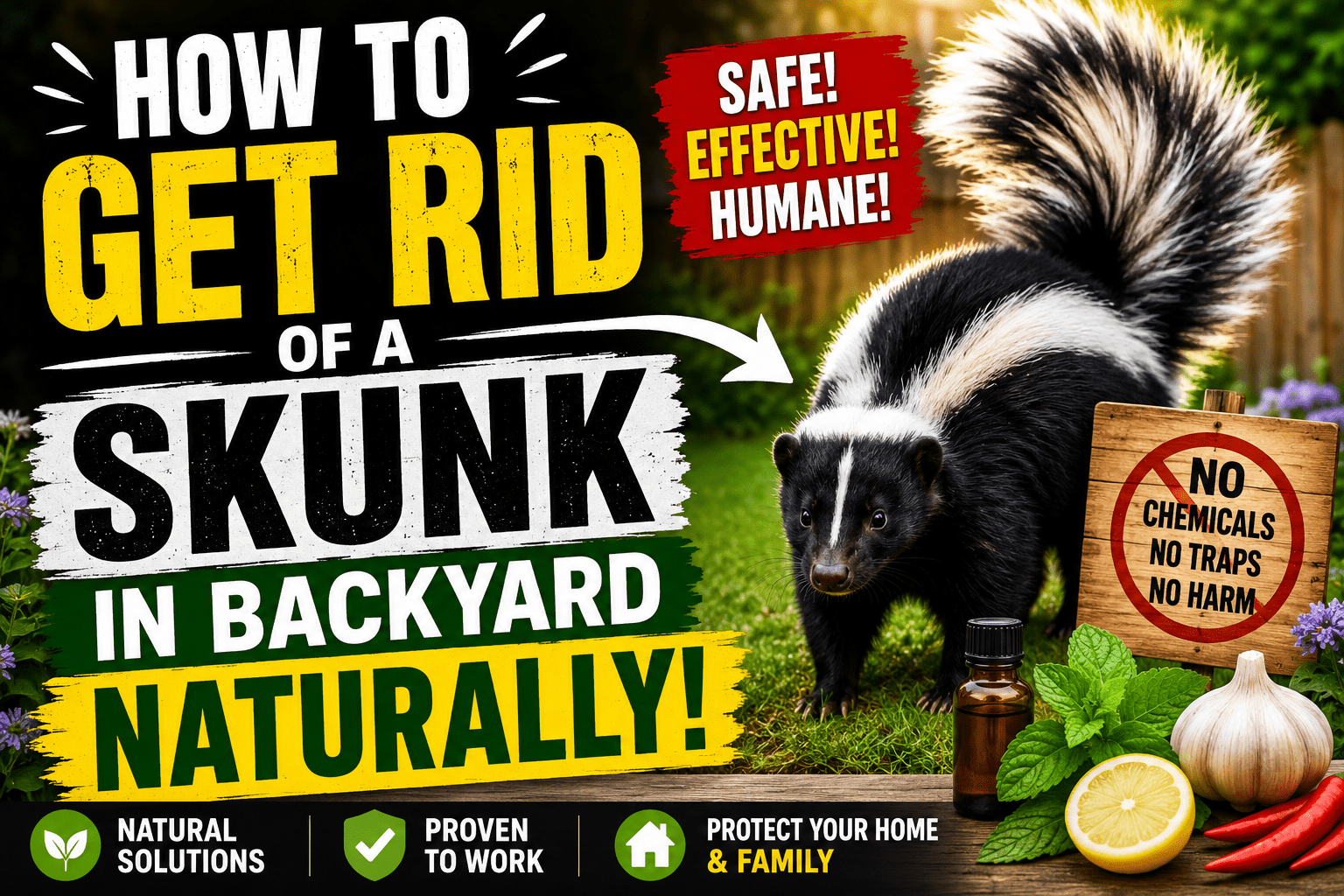
How to Get Rid of a Skunk in Backyard Naturally?
If skunks have taken over your backyard, and you want to know how to get rid of a skunk in backyard naturally, here is a complete guide for in this article.
You can get rid of them naturally, without harmful chemicals or inhumane traps. The important thing to remember is to eliminate anything that will attract skunks, including food, shelter, and to use only safe, natural repellents. This technique will make your backyard less attractive to skunks, forcing them to move elsewhere.
Explore the reasons for skunks visiting your backyard.
The key to eliminating skunks without harming them is to understand what draws them to your yard in the first place. Skunks are searching for food, water, and places to hide. These attractions should be discovered and eliminated to achieve effective long-term skunk control.
Skunks are attracted to foods such as fruits, vegetables, and garbage.
Skunks are opportunist feeders looking for an easy meal. Popular backyard attractants include: uncleaned pet food, fallen fruit, spilled bird food, uncovered garbage, and lawn or garden insects. Eliminating or fencing them can help keep skunks out of your yard.
Safe Shelter Areas
Skunks need safe shelter to rest and raise their young. They hide from predators and bad weather in spaces such as under decks, sheds, porches, wood piles, or dense shrubs. Access to these areas should be prevented.
Access to Water
Skunks are drawn to water sources—birdbaths, pet bowls, ponds, or any outdoor supply that leaks or drips. Remove standing water to eliminate what attracts skunks.
How to Get Rid of a Skunk in Backyard Naturally?
Would you like to get rid of a skunk in the backyard naturally?
The key to eliminating skunks naturally from your backyard is to make it difficult for them to access without being dangerous to your family, pets, or wildlife. Consistent use of these methods is the best way to obtain long-term results.
Remove Food Sources
Put animal-proof lids on all garbage cans; clean up spilled bird seed right away; bring pet food inside after feeding. Harvest and collect fallen fruit and vegetables from your garden to eliminate a source of snacks for skunks.
Apply natural pesticides or repellents for skunks.
There are a few good natural odors that will keep skunks away from your property:
- Citrus peels
- Vinegar-soaked rags
- Garlic spray
- Peppermint oil
- Predator urine products
Use these natural repellents where you’ve seen skunk activity, such as around decks, sheds, and other places. Replace frequently to ensure they remain effective.
Install Motion-Activated Devices
Sprinklers and outdoor lights that are sensitive to movement may startle and frighten skunks, diminishing the attractiveness of your yard. These devices make it less likely they will choose your property, since they look for dark, quiet places. Apply to infested areas and where skunks have been observed or may otherwise nest.
Block Skunk Hiding Places
One of the best ways to deter skunks from settling in is to seal off potential hiding places. Look for any areas, holes, or open spaces around the property where a skunk might be able to reside.
Stabilization of structures – secure areas
Check any openings or gaps below doors, under decks, porches, sheds, or under a crawlspace. To stop people from digging in these areas, surround them with sturdy wire mesh or fencing a couple of inches above the ground.
Trim Overgrown Vegetation
Skunks love overgrown bushes, dense shrubs, and tall grass. Regularly mow the lawn and clear away brush or piles of leaves to maintain an open, less appealing yard to discourage wildlife.
Store Firewood Properly
Wood piles need to stand off the ground and be cleaned up. This will not allow skunks to tunnel under and use the woodpile as their shelter.
Natural Prevention Tips to get rid of skunk
It is easier to keep skunks out of your yard than to get them out once they are in. Establish good habits to keep your property unattractive to skunks in the long run.
Keep your yard clean and tidy.
Empty the yard regularly of debris, fallen fruit, and food waste. Food and nesting sites around a well-kept yard with little cover will deter skunks from staying in or around the yard.
Protect Garden Areas
Use rigid fencing to enclose vegetable gardens and compost areas. This keeps skunks away from insects and food scraps.
Reduce Grub Populations
The skunk uses its digging roots to find grubs and insects to eat as it hunts on grassy surfaces. Grub and healthy lawn treatments are effective in eliminating a skunk’s staple food source and can stop visitors to your yard.
When dealing with skunks, what NOT to do?
Don’t chase, corner, or scare a skunk. If skunks feel threatened, they will spray, and their spray is hard to remove. Do not use any chemicals, poisons, or harmful traps that might harm skunks, pets, or other wildlife. When possible, opt for humane and environmentally friendly solutions.
Patience is important
Natural skunk removal and prevention requires time and patience. It can take one or more weeks for results to occur, so keep going for the best results.
Conclusion
When dealing with a skunk in your backyard, it is important to understand what attracts them: food, water, and shelter. Eliminate these resources, use safe repellents, and clean up the yard to encourage skunks to leave. These natural approaches can be consistently implemented to sustain a humane and effective backyard skunk control program.