
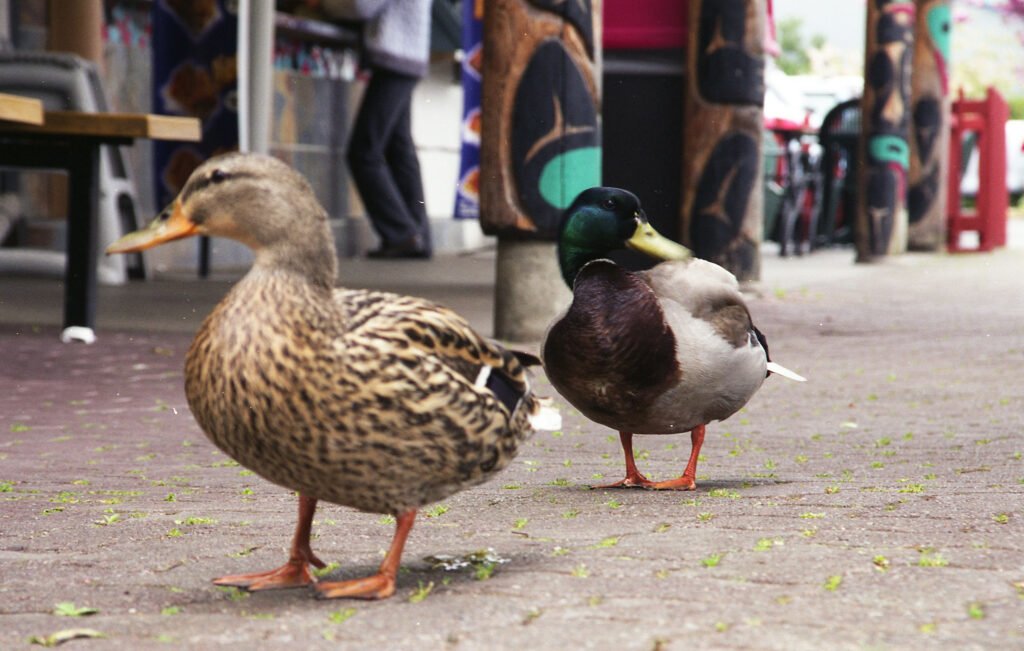
So, how long do ducks live? A duck’s lifespan is 2-10 years in the wild, and backyard raised ducks can live up to 8-15 years and some cared for pets have lived to 20 years and beyond. The main difference is protection against predators, weather and starvation.
Whether you’re a curious bird lover or you’re considering starting your own flock, this guide explains how long ducks live in their natural environment and at home, examines some popular strains, and offers some tips on how you can help your flock live longer.
We will also have a close look at an easy-to-raise friendly heritage breed – Ancona ducks.
How Long Do Wild Ducks Live?
Most wild ducks are not tagged and tracked, making it difficult to estimate duck ages. Yet the overall scene is a clear one: the vast majority of wild ducks will not live to be ten years old, and many will not have lived to be more than a few years old. The species most people think of are mallards, which can survive for 5 to 10 years typically if they do survive the critical early years; other sources suggest a range closer to 2 to 5 years in the wild.
Why is it that it has such a short lifespan? Wild ducks have many threats:
- Predators including foxes, raccoons on land and in water, snapping turtles and birds of prey, particularly in search of eggs and ducklings.
- Harsh winters and periods of food scarcity
- Hunting pressure and habitat loss
- Shared water sources under disease and pollution conditions
The most difficult challenge in duckling development is survival. Many wild ducklings die, thus lowering the average. Those that do grow up can live a lot longer. According to Animal Corner’s duck lifespan guide, some species, such as the canvasback, have lived beyond 15 years.
How Long Do Domestic Ducks Live?
Domestic ducks do not live quite as long as their wild counterparts. The average life span of most backyard ducks is about 10 years, although they can live for 8 to 15 years. Some pet ducks will live to 15 to 20 years or even longer with good husbandry. They have the advantage of safe, secure housing, a regular supply of food and not always having to be wary of predators, as BirdFact’s duck lifespan guide will tell you.
Breed matters too. Fast growing meat breeds may have shorter lives, while lighter, more active breeds are likely to live longer. Let’s get brief comparisons of popular breeds:
| Duck type | Typical lifespan | Notes |
| Wild mallard | 5–10 years | Many die much younger |
| Domestic mallard | 5–15 years | Varies a lot between birds |
| Pekin | 8–12 years | Fast growth can shorten life in meat flocks |
| Khaki Campbell | 8–12 years | Prolific layer |
| Indian Runner | 8–12 years | Active, upright forager |
| Call duck | 7–10 years | Small and chatty |
| Ancona | 8–10 years | Hardy, calm dual-purpose breed |
They are averages from various guides to breeding and caring for animals including Animal Corner and Hobby Farms and should not be viewed as guaranteed ranges. Single ducks may be above or below them.
How Long Do Ancona Ducks Live?
With proper husbandry, Ancona ducks can live from 8 to 10 years. That’s a reliable, long life and it is one of the things that makes it such a popular breed in the backyard. No two birds look the same, and Anconas are easily recognized by their broken, splashy feathers that are often black and white, chocolate and white, or lavender and white.
They are quiet, have lots of energy, and are robust, and are great foragers who will readily seek food including bugs, worms, and weeds. They are calm, multi-purpose animals that are raised for eggs, meat, and companionship, and weigh 6-8 lbs for drakes and 6-7 lbs for ducks, according to The Livestock Conservancy.
Ancona egg production
About 210 to 280 large eggs are laid per year by the healthy Ancona ducks, and the eggshells are white, cream, tinted, blue or green. A good part of the hens’ lives will be productive as they will lay most of them in the first three years and continue to lay for another five to eight years.
Why Ancona ducks are worth knowing
In the past, the breed was facing extinction. Press accounts give only about 125 birds breeding in the U.S. in 2000, and now its population has been added to The Livestock Conservancy’s “Watch” list, where roughly 1,000 to 1,500 birds are currently on the list. The origins are not certain, with the Conservancy claiming that Anconas originated in the United States in the early 1900s in New York, but others believe they came from Britain. At either rate, it’s a benefit to a heritage breed.
What Affects How Long a Duck Lives?
Two ducks of the same age can go two very different routes. These are the main reasons:
Breed and genetics
Traditional, light, small breeds typically outlast the heavy, fast-growing breeds. For instance, Pekins bred for meat growth tend to grow fast, which may cause leg problems and shorten their lifespans.
Diet and nutrition
Ducks require a complete diet and adequate niacin levels for good bones and legs. According to this duck lifespan guide from Vet Verified, providing only chick feed for long periods may cause chicken legs to become malformed and less resistant to disease. The difference in quality waterfowl or non-medicated feed, greens and grit make a big difference.
Housing and predator protection
The 3 best life-extenders for backyard ducks are: a secure coop at night, dry bedding, and a fenced run. Early death in ducks is not from old age but from predators. You can also learn to protect backyard animals from hawks.
Cleanliness and availability of water
Ducks require clean water, in which they can dip their heads. Pollen will cause respiratory issues, eye infections and parasites will come in with dirty water.
Sex and egg production
Some keepers notice that drakes are not as prone to weight loss as hens are, when they produce hundreds of eggs annually, and that’s yet another reason for the older life expectancy. The Tyrant Farms guide to duck aging goes into the difference in more detail.
Health care
Regular inspections, prompt treatment on injuries and parasite control. Backyard ducks have an advantage over their wild counterparts because someone knows when they are not feeling well.
How to Help Your Ducks Live Longer
One cannot always say to a duck that he is 15 years old, but one can put the odds on in favor of a duck:
- Lock them up at night: Most losses are prevented with predator-proof coops, solid, not mesh, floors, and small gauge wire.
- Feed the right diet: Offer a waterfowl or balanced feed, provide leafy greens, and provide grit for digestion.
- Supply good deep fresh water: Replace frequently for clean bills and eyes.
- Keep bedding dry: Dirty bedding and wet feet develop bacteria.
- Give them room to forage and move: Ducks that are active remain stronger; breeds such as Ancona are best kept when allowed to roam.
- Watch for early warning signs: If any dog is limping, is down, has runny eyes, or isn’t eating, it needs immediate attention.
- Find a vet who sees poultry or waterfowl before you need one.
FAQs about Duck Lifespan
Do ducks live longer in captivity than in the wild?
Yes. In the wild, domestic ducks live 2 to 10 years, which is shorter than their normal lifespan of 8 to 15 years, due to the absence of predators, food shortage, and cold weather.
What is the oldest age a duck can reach?
Well-cared-for pet ducks have been reported to reach 15 to 20 years or more, though that’s the exception rather than the rule.
Do male or female ducks live longer?
Drakes often outlive hens in domestic flocks, partly because hens put so much energy into laying eggs.
How long do Ancona ducks live?
Ancona ducks can breed for 5 to 8 years of their total life span, which is about 8 to 10 years.
Are Ancona ducks good for beginners?
Yes. In fact, they are easy to keep, hardy, and even a good choice for first-time duck keepers, according to The Livestock Conservancy’s heritage duck breed comparison chart.
Final Thoughts
So, how long do ducks live? Wild care will take a few short years, while a well-managed backyard might require 10 years or more, depending on breed, diet, shelter and care. Ancona ducks make a good starting point for an easy, healthy flock that produces good eggs and lives long.