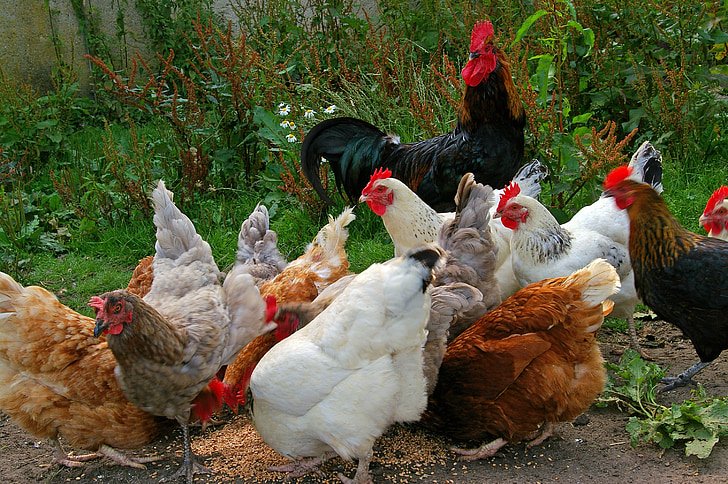
Chickens are very enthusiastic foragers and will peck at just about anything including things that can make them sick. This is why backyard keepers are always interested in the question: what can chickens eat and what should they NEVER eat.
This guide will help you learn the fundamentals of a healthy chicken diet, the foods that are safe for your chicken and the foods that are not. We also address two frequently asked questions in great detail: Can chickens eat tomatoes and can chickens have onions.
Can Chickens Eat Tomatoes?
Yes, tomatoes are safe for chickens in small amounts and when they are ripe.
Ripe red tomatoes are an excellent hydrating treat, safe in the summer. They are a good source of vitamin C, vitamin A, potassium, and antioxidants like lycopene.
Why Ripeness Matters
Tomatoes are part of the nightshade family (Solanaceae), the same family as potatoes, peppers, and eggplant. Glycoalkaloids, including solanine and tomatine, are found in green parts of nightshade plants. The Wikipedia page for solanine contains more information.
- Ripe red tomato flesh: Safe.
- Green, unripe tomatoes: Higher in tomatine, so it’s best to avoid them or feed very sparingly.
- Avoid Tomato leaves and stems: Alkaloids are the most concentrated in these parts.
Most chickens don’t eat bitter plant material or green tomatoes by themselves. However, if the birds are free-ranging, garden plants should be fenced off, but a hungry or curious bird may sample them. Free-range birds also need to be watched from above, so learn how to protect your free-ranging flock from hawks while you are fencing off the garden.
How to Feed Tomatoes to Chickens
- Take a ripe, red tomatoes.
- Slice them in half or tie them up and hang them for the flock to peck at.
- Cut away moldy or rotting areas.
- Give them occasionally but not everyday.
Tomatoes are watery, slightly acidic, so too many will result in loose droppings. Some keepers also find that excessive intake of acidic foods may impact egg quality, so it’s best to keep it in check.
Can Chickens Have Onions?
Try to not feed onions and certainly not too much.
The answer to “can chickens have onions” is more complicated than a flat yes or no. Onions are part of the Allium family, along with garlic, leeks, chives, and shallots. They are rich in sulfur-containing compounds that are toxic to red blood cells in many animals, such as n-propyl disulfide.
This can cause hemolytic anemia, a type of anemia in which red blood cells are destroyed at a rate that is faster than the body can replace them, when present in large amounts.
What We Know About Onions and Poultry
- Clearly, dogs, cats and livestock are vulnerable to onion toxicity. Chickens seem to be a little more forgiving and some owners say they have no issues with small amounts.
- However, using a lot of raw onion poses a risk. Symptoms include weakness, pale combs and wattles, lethargy and decreased egg production.
- Onions can also impart an off flavor to eggs. Many keepers have reported an oniony flavor after the hens have consumed large amounts of them.
Our Recommendation
There are lots of treat options that are safer, so avoid giving onions or treat them as a very special small treat. Don’t feed onions in large quantities and don’t feed foods that are a high source of onion like seasoned or fried foods, because they have salt and fat. If your hen has eaten too much and looks dull or gray, get a veterinary who has experience with poultry.
Safe Foods Chickens Can Eat as Occasional Treats
Many fresh, plain foods can be offered in small portions:
| Food | How to offer it |
|---|---|
| Leafy greens, broccoli, peas, cucumber, zucchini, pumpkin, and squash | Wash and chop into manageable pieces. |
| Berries, melon, banana, and apple flesh | Offer small portions; remove apple cores and hard pits. |
| Corn, wheat, and oats | Keep servings small so grains don’t crowd out complete feed. |
| Plain cooked rice or pasta | Serve unseasoned and in moderation. |
| Fully cooked beans or dried mealworms | Use as occasional treats, not as a replacement for poultry feed. |
Offer new foods in small portions and take out leftovers before they go bad. When feeding whole grains or other foods outside of their normal feed to chickens, ensure that they have the necessary insoluble poultry grit available if they are foraging for it.
Foods which are not recommended for chickens
Some foods are not safe and others are not recommended because they may be harmful if eaten in excess or because they replace a healthy diet.
| Food | Why to avoid it |
|---|---|
| Avocado (skin, pit, and leaves) | Contains persin, which can be toxic to birds |
| Chocolate and cocoa | Contains theobromine and caffeine, harmful to birds |
| Raw or dried beans | Contain hemagglutinin (phytohaemagglutinin), which is toxic unless cooked thoroughly |
| Green potatoes and potato skins | High in solanine |
| Rhubarb leaves | High in oxalic acid |
| Moldy or spoiled food | Mycotoxins can cause serious illness or death |
| Salty foods (chips, processed meats) | Excess salt can cause salt poisoning |
| Caffeine and alcohol | Toxic to chickens |
| Sugary, fried, or heavily processed foods | Contribute to obesity and fatty liver disease |
| Large amounts of onions or garlic | Can cause hemolytic anemia and tainted eggs |
| Citrus in large quantities | May upset digestion; keep it to a small amount |
A Note on Apple Seeds and Fruit Pits
The fruit stones of stone fruit and apple seeds may contain cyanide, which will be released when chewed. Although the risk posed by a few seeds is small, it is a simple measure to take to reduce risk.
Tips for Safely Feeding Treats
- Add foods slowly and monitor for tummy troubles.
- Cut food into small chunks, particularly for chicks.
- Take out food that hasn’t been eaten within a few hours to prevent mold and pests.
- Wash produce to remove pesticide residue.
- Provide grit when feeding anything other than commercial feed.
- Limit treats to no more than 10% of their diet.
University extension services also have great backyard poultry guides published. Penn State Extension is a good place to start.
Frequently Asked Questions
Can chickens eat tomatoes every day?
At maturity, tomatoes are good for occasional snacks, but may lead to diarrhea if fed continuously and balanced nutrition may be reduced. A few times a week is sufficient.
Can chickens eat tomato plants?
No. Tomatine and solanine are found in the leaves, stems, and green parts, so be sure to keep the flock away from your tomato patch.
Can chickens have onions if they’re cooked?
The compounds that damage red blood cells do not go away when cooked. Onions that have been cooked are not safe, and the salt and oil added to cooked dishes cause other issues.
Can chickens eat garlic?
Garlic is in the same family as onions. Small amounts are sometimes added to feed or water, but there is little scientific evidence of benefits, and high doses can be as harmful as onions.
What is the best treat for chickens?
All of these are great options—just be sure to choose them in moderation, such as leafy greens, pumpkin, berries, mealworms, and ripe tomatoes.
Final Thoughts
A healthy flock starts with quality commercial feed, with fresh treats as a bonus. The short answer to “can chickens eat tomatoes“ is yes, as long as they are ripe and the plant’s green parts are kept out of reach. The answer to “can chickens have onions“ is that it’s safest to avoid them, since large amounts can damage red blood cells and affect egg flavor.
Keeping hens in a neighborhood with strict rules? Here is how to hide your chicken coop from the HOA while still giving your flock the best care.
If you have any questions about a food, leave it out or ask a poultry veterinarian. Your hens will thank you with improved health, happier demeanor, and better eggs!