
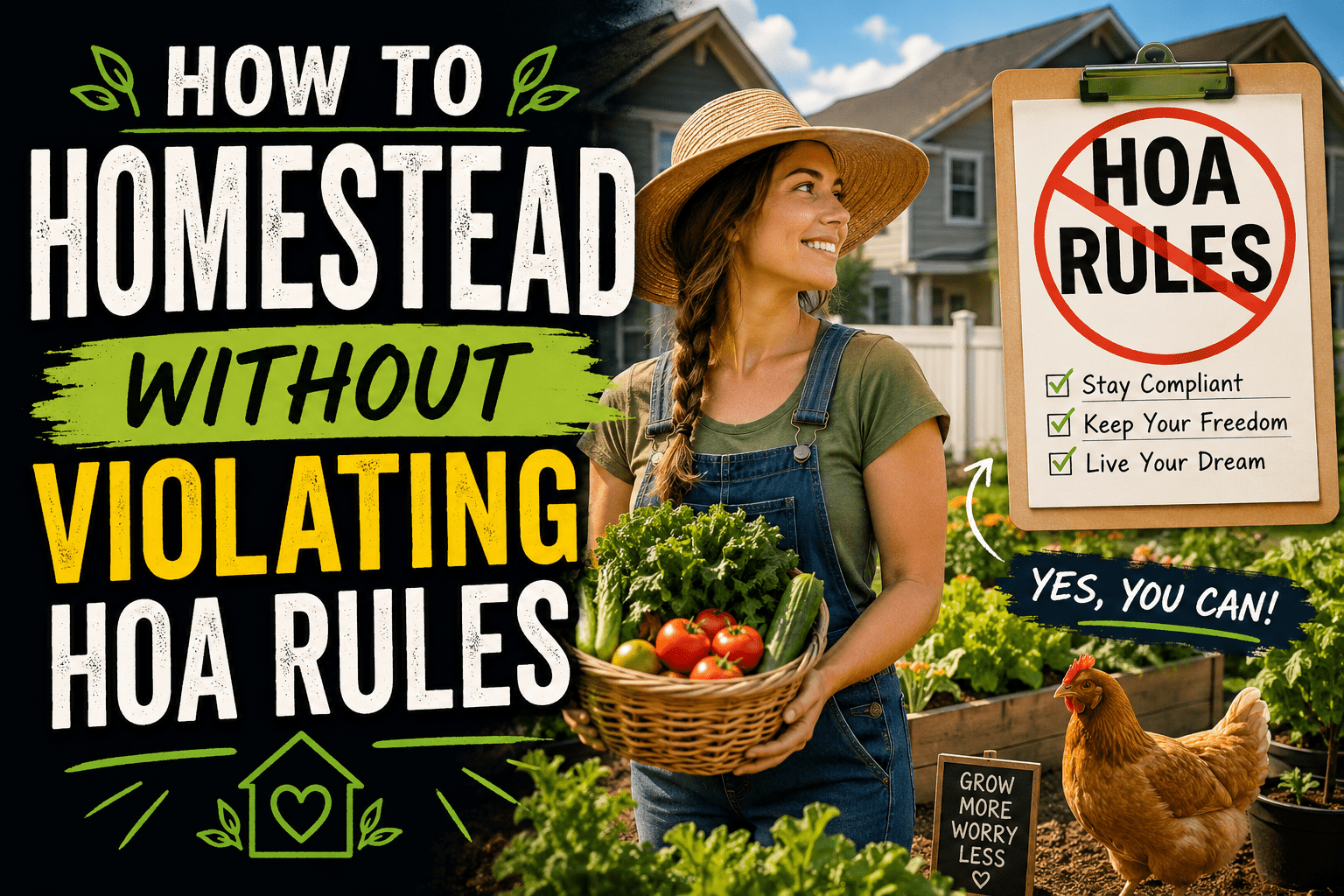
How to Homestead Without Violating HOA Rules
When you carefully plan and understand the community guidelines of HOA regulations, the homesteading in a neighborhood is possible. Several homeowners are successfully growing food, compost responsibly, and creating sustainable living spaces by following the HOA rules. The self-sufficiency balancing with neighborhood appearance standards is the main key.
How to homestead without violating HOA rules? You can homestead under the HOA rules by using container gardening, backyard composting & indoor food storage. Keep your property neat and clean, must review the HOA rules and communicate with the board for better understanding.
What Is HOA-Friendly Homesteading?
HOA-friendly homesteading means growing food, reducing waste become more self-reliant while still creating a productive home environment by following the homeowners’ association rules.
HOA regulations also control the landscaping, visible storage areas and outdoor structures.
Read Your HOA Rules Carefully
First you need to review HOA governing documents carefully. Most HOAs rules cover the following points:
- Lawn and garden structure and look
- Height and design of fence
- Structures of backyard
- Composting regulations
- Animal restrictions
- Water collection systems
Some HOAs completely prohibit these activities and some only limit visibility from the street. Reviewing the governing documents carefully and understanding the exact wording can help you to avoid fines and neighbor complaints.
Landscaping and exterior property changes are the main sections which mostly affect homesteading projects. So you need to pay close attention to these sections.
How to homestead without violating HOA rules?
One of the best and easiest ways of homesteading without breaking HOA rules is vegetable gardening. You just need to make your garden neat and intentional.
Best HOA-Friendly Garden Ideas
- Raised garden beds with clean borders
- Decorative container gardens
- Vertical gardening systems
- Herb gardens near patios
- Edible landscaping mixed with flowers
Overgrown planting areas and messy layouts may cause of complaints, so you must avoid them. A well maintained garden looks more attractive than a traditional landscaping.
Use Edible Landscaping
The combinations of food-producing and decorative outdoor plants are called edible landscaping. It helps homeowners to protect them neighbors’ complaints and grow foods.
Here are some popular edible landscaping options:
- Blueberry bushes
- Rosemary hedges
- Kale borders
- Fruit trees under the HOA size limits
- Lettuce and herbs in flower beds
Mixing the edible plants and decorative flowers can create a great appearance which look beautiful and blends naturally into the HOA communities.
Keep Composting Discreet
Composting can support present needs of homesteading, but several HOAs restrict the visible compost piles because of odor and appearance issues.
How to Compost Without HOA Problems
- Use proper sealed compost bins
- Place the bins behind fences
- Do not add meat and dairy.
- Maintain proper compost balance
- Keep the area clean and dry
Modern enclosed compost systems are odor-controlled, compact and did not create issues for neighbors and HOA inspections.
Choose HOA-Friendly Backyard Chickens Carefully
Some HOAs did not allow chickens but some are agree to allow limited quantity of backyard poultry. If you’re HOAs permitted chickens, strictly follow their guidelines.
Tips for Keeping Chickens in HOA Communities
- Keep only the allowed quantity
- Keep quiet breeds
- Maintain a clean coop
- Hide coops behind fencing
- Control odors properly
Noise complaints are one of the most common HOA issues of backyard poultry so avoid the roosters.
If your HOAs did not allow chickens, instead of this you can consider smaller homesteading activities such as food production and herb gardening.
Install Rain Barrels the Right Way
Rainwater storage is also a popular in homesteading, but some HOAs did not allow visible rain barrels.
Follow these methods to install the rain barrels in the right way and stay complaints:
- Use the decorative rain barrels
- Use the barrel colors matching with your home exterior
- Install the barrels behind fencing or shrubs
- Follow the local drainage rules and policy
Mostly the modern rain storage systems are attractive designed while still help to reduce water usage.
Focus on Backyard Homesteading
Front yard homesteading mostly have stricter HOA rules because they affect neighborhood appearance. So backyard homesteading is better because it provide more privacy and flexibility.
Backyard Homesteading Ideas
- Raised vegetable beds
- Small greenhouse setups
- Compost bins
- Fruit trees
- Vertical planters
- Hydroponic systems
Keep the projects behind fences and reducing the visibility can lower the chances of complaints.
Use Indoor Homesteading Methods
Indoor homesteading is best for HOA communities and it avoids exterior restrictions entirely.
Here are some perfect indoor homesteading options you can try:
- Hydroponic gardening
- Indoor herbs
- Mushroom growing kits
- Food preservation
- Sourdough baking
- Homemade cleaning products
These methods allow homeowners to practice self-sufficiency year round under the community rules.
Build Positive Relationships with Neighbors
Keeping the positive relationship and good communication with your neighbors can prevent several HOA conflicts. If you will keep your property clean and attractive the neighbors will less likely to complain.
Simple Ways to Avoid Complaints
- Keep the landscaping neat and clean
- Avoid odors and noise
- Keep the path clean
- Properly store the tools
- Avoid cluttered outdoor areas
A respectful approach can creates support for your homesteading efforts.
Request HOA Approval before Major Changes
If you want to add or modify structures like sheds, greenhouses, or fencing you need HOA approval before modification. The written permission is required by HOAs for exterior modifications.
Submit your modification plans with sketches or photos can highly improve approval chances. Make sure that your project will maintain neighborhood appearance standards.
Common Homesteading Activities That Usually Work in HOA Communities
Many sustainable living practices are HOA-friendly when done neatly and responsibly.
Examples Include
- Container gardening
- Herb growing
- Indoor food preservation
- Backyard raised beds
- Vertical gardening
- Decorative compost systems
- Rainwater collection
- Pollinator-friendly landscaping
Starting small helps you learn what works best within your specific community rules.
Final Thoughts
Homestead under the HOA rules require creativity, maintenance, organization and well planning. By doing effort for clean landscaping, discreet sustainable systems and HOA approved projects you can enjoy several benefits of self-sufficient living without conflict.
Nobody can successful homesteading by ignoring the HOA rules. The homestead is about adapting proper methods that fit modern neighborhood standards while still helps you to grow food, reduce waste and live more sustainably.