
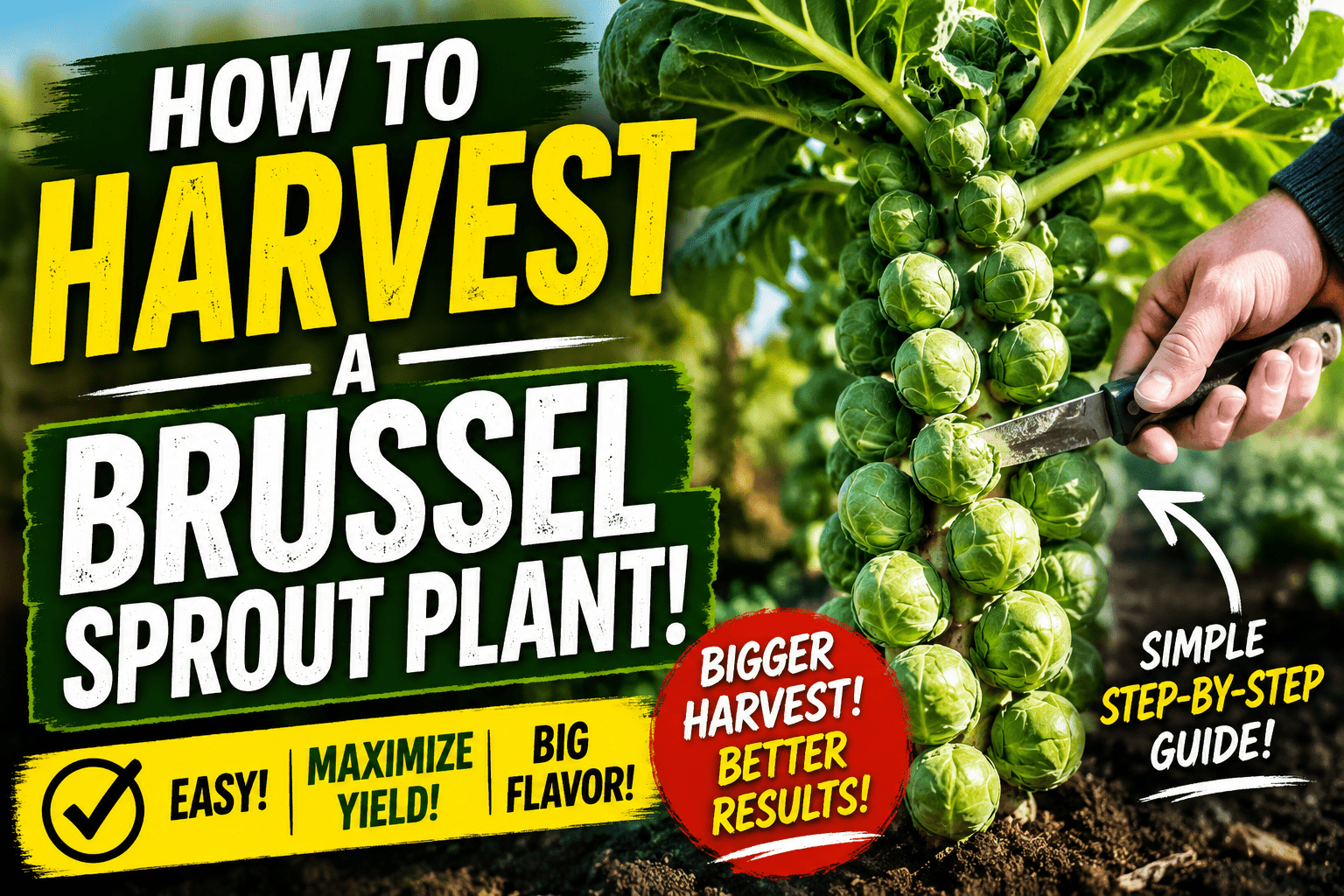
How to Harvest a Brussel Sprout Plant?
Brussels sprout plant take a bit of patience to grow, but knowing how to harvest a Brussel sprout plant properly is critical to ensure optimal flavor and productivity.
A correct harvest time results in firm, flavorsome sprouts and sustained production. Whether you’re a home gardener or a commercial grower, you can get the most out of your crop if you follow proper harvesting methods.
Harvest Brussels sprouts by beginning to remove the mature sprouts from the bottom of the stalk when they are 1-2 inches in diameter and firm.
Twist or break mature sprouts from the stem, allowing the smaller upper sprouts to continue growing. Harvesting every few days maximizes flavor and maintains ongoing production.
When Are Brussels Sprouts Ready to Harvest?
Brussels sprouts grow in clusters on a thick central stem. They grow slowly from bottom to top, not all sprouts will be ready at the same time. Multiple harvests can be taken from the same plant in a few weeks.
Here are the signs that you need to watch for to know when your Brussels sprouts are ready to harvest:
- Tightly packed and firm heads
- Approximately 1-2 inches in diameter
- Deep green shade with rich color
- Leaves tightly wrapped around sprout.
- No signs of yellowing or splitting were found.
Brussels sprouts are ready to harvest 80-120 days after planting outdoors, although some varieties may mature sooner or later based on weather and cultivar.
Best Season for Harvesting
Brussels sprouts are best harvested in cool weather. Starches in the sprouts turn into sugars when it gets cold, giving it a sweeter flavor and harder consistency.
Some good times for harvest are:
- Late fall
- Early winter
- After one or two light frosts
How to Harvest a Brussel Sprout Plant?
Always start to harvest from the bottom of the stalk and progress upwards as more sprouts mature to the appropriate size.
Step 1: Check the Lower Sprouts
Start at the bottom of the stalk as these are the first to mature. Choose sprouts that are plump and firm.
Choose sprouts that are:
- Firm to touch and dense
- Fully developed
- Compact and dense
Do not remove loose or small sprouts unless a frost is imminent and you must pick all of the sprouts before freezing.
Step 2: Remove the Mature Sprouts
Hold the sprout and gently twist it until it snaps off the stalk. Clean pruners or a sharp knife can also be used for a clean cut to avoid damage to plants and disease.
Take care not to damage adjacent sprouts that are still in the process of development.
Step 3: Keep harvesting upwards
As the season goes on, upper sprouts mature next. Monitor plants every few days to pick new mature sprouts. Picking regularly will stimulate more production and quality.
A staggered harvest can be achieved with this method, leading to multiple picks from a single plant.
Plant preparation for easier harvesting
Easy harvesting and good sprout development can be achieved through simple maintenance.
Remove Yellow Leaves
As the plant grows, remove lower yellow leaves. This allows light and air to penetrate the sprouts, decreasing the risk of disease and facilitating easier harvest.
Benefits include:
- Better airflow
- Accessibility to sprouts is increased.
- Minimized disease and pest risk
- Improved plant appearance
Finish the Plant Late in the Season
Truncate the growing tip of the Brussels sprout stem 3-4 weeks before final harvest. This prevents upward growth and allows the remaining sprouts to grow larger and evenly mature. This practice is designed to help the plant put more energy into growing the existing sprouts than into new ones.
Harvesting the whole stalk at once
When a hard freeze is predicted, or most sprouts have reached maturity, they may be cut off and all the sprouts collected in one operation. It’s a good method for protecting crop if cold weather is in the forecast.
Harvesting the whole stalk is best done when the heads are just starting to turn white.
Consider whole-stalk harvesting when:
- Most sprouts are mature.
- Winter weather is getting bad.
- You want a single large harvest.
The stalk should be cut at the base of the stem
Cut the stalk close to the ground with a sharp garden saw or pruners. Take out the large leaves and keep the stalk in a cool dry place upright until you are ready to harvest the sprouts.
After cutting:
- Remove large leaves
- Store the stalk upright.
- Harvest sprouts when desired
When stored in the cool, the whole stalks will remain fresh for several days.
Common Harvesting Mistakes to Avoid
There are some common errors that cut the quality and quantity of your Brussels sprout crop.
Harvesting Too Early
If the sprouts are picked too early, they will be small and less flavorful. Wait until they are the proper size for optimum taste and yield.
Ignoring Upper Sprouts
Be sure to look at the top of the stalk after the first harvest! These sprouts tend to grow later and may not be noticed if you don’t make the return trip.
Leaving Mature Sprouts Too Long
Exposing mature sprouts to the plant for too long will result in the sprouts becoming loose, splitting or becoming bitter. Harvest regularly to avoid this problem
How To Store Freshly Harvested Brussels Sprouts?
Good storage will ensure freshness and flavor once harvested. To keep Brussels sprouts fresh after harvest:
Avoid washing sprouts before storing as it will accelerate the deterioration rate. Place unwashed sprouts in a perforated plastic bag in the refrigerator, they will keep for 1-3 weeks. Store in the refrigerator and use within 1-3 weeks.
Brussels sprouts can be blanched in boiling water for several minutes, then plunged into cold water and frozen in airtight containers for long-term storage.
Conclusion
Once you know what to do, harvesting Brussels sprouts is easy. First select solid, ripe sprouts from the lower part, then work up the plant as the sprouts mature, cut off old leaves, and harvest frequently for the finest sprouts. With the right timing and technique, you’ll enjoy a continuous harvest of fresh, sweet Brussels sprouts during the cool season.