
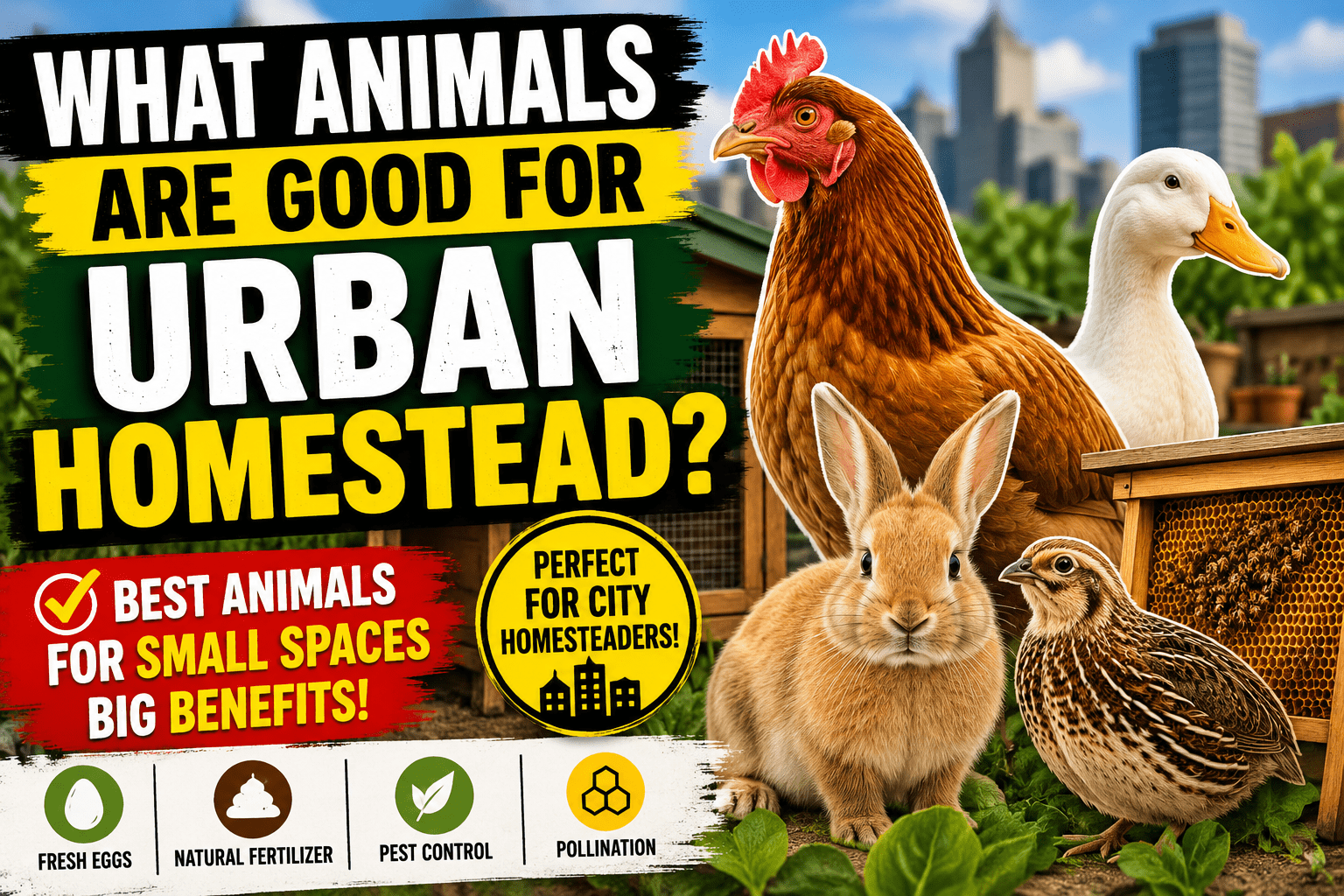
What Animals Are Good for Urban Homestead
Selecting appropriate animals for small spaces increase your success with an urban homestead. If you are wondering what animals are good for urban homestead, here is a complete guide about this research.
Animals that are well suited to the urban homesteaders are human friendly, produce benefits such as eggs or compost, and meet with local laws.
By knowing which animals are appropriate, you as a beginner will be able to create a productive back yard without having to worry about enough land.
What Animals Are Good for Urban Homestead
It is important to choose the proper type of animal based on the available amount of space, local regulations, noise levels, and upkeep. For cities, the ideal animal will be one that is small and quiet.
Additionally, urban homestead animals, being simple to manage when you start out as an urban homesteader, can provide you food, fertilizer, pest control, or companionship; therefore, they will improve your self-sufficiency and productivity.
Many urban homesteaders, in particular, start out with low-cost animals that do not require expensive shelters or need much space to graze.
Chickens Are the Most Popular Urban Homestead Animal
Urban homesteaders generally choose chickens because they’re easy to raise and yield a high return on investment. A few hens will lay fresh eggs while eating up your kitchen scraps.
Additionally, chickens produce manure that is high nutrients which can be used to create organic compost. Therefore, most urban homesteaders own three to six hens for their small families.
Best Chicken Breeds for Small Backyards
For those with suburban setups who want to keep quiet and friendly chicken, breeds like Buff Orphington’s, Australorps and Silkies is a good selection.
Be sure to review local laws before starting your own flock since some jurisdictions impose limits on flock size or have restrictions against keeping roosters based on noise.
Rabbits Are Quiet and Space Efficient
Another best animal to rise in an urban homestead is a rabbit. They don’t take up much space, and typically low noise, and can be housed in backyard hutches.
Many people who homestead with rabbits have them for food (meat) and companionship. Additionally, their droppings can be used directly in gardens, so it is useful as a source of fertilizer for vegetable plots.
Low Feed Costs and Simple Maintenance
When you own a rabbit as a pet, there will be significant savings over larger animals in the types of foods. A rabbit can safely eat hay, grass, vegetable scraps and pellets.
Compared to larger animals, they are a lot easier to clean up and did not make noise which creates fewer problems with neighbors.
Ducks Can Thrive in Urban Homesteads
Urban homesteaders are increasingly choosing to keep ducks as a viable source of food. Ducks are hardy animals that will usually lay eggs throughout the year.
Duck eggs are bigger than chicken eggs, which makes them a “baker’s preferred” egg type. Some breeds are quieter than chickens, and therefore, better for urban areas where there will be many neighbors.
Natural Pest Control Benefits
Ducks are great for controlling pests because they eat slugs and many types of insects that can damage or destroy vegetable and flower gardens.
Ducks prefer a daily source of water and will create muddy areas, so it is critical to ensure that there is good drainage and upkeep around those areas.
Bees Help Urban Gardens Grow Better
Urban homesteads that include beekeeping as part of their setup will benefit from keeping bees. Because bees require such a small amount of space, they are able to provide essential pollination services for many crops (including fruit, vegetables, and flowers).
Additionally, urban beekeepers can also expect a varied honey harvest based upon hive size and seasonal conditions.
Important Considerations before Keeping Bees
Before starting a bee keeping hobby, make sure to check your local laws regarding hive placement and number of allowed hives. The beginner should also familiarize with the proper care of bees and the safety factors involved with keeping bees.
Flowers that will attract pollinators will also contribute to healthy bee colonies.
Quail Are the Perfect Choice for Small Urban Spaces
Quail are well suited for small urban areas. They reach maturity rapidly, produce a high-quality egg (nutritious), and take up considerably less space than chickens.
Quail are ideal for urban homesteaders because of their small size and quiet demeanor.
Easier Housing and Lower Noise
Housing for Quail is straightforward, fitting nicely in a tight area or patio, and the quail are soft-sounding, so they will not disrupt your neighbors as much. They also require less feed, thereby lowering the upkeep costs for many beginner owners.
How to Select Urban Homesteading Animals?
Before selecting animals, check out city or HOA regulations that might limit what or how many animals are allowed at your address, as not following any regulations could result in fines or complaints against you.
Match Animals to Your Space and Time
When selecting which animals to get, consider the available space, your daily schedule to care for those animals each day, and your purpose. For instance, if you are a beginner, you may start with an animal that requires very little effort to maintain, such as chickens, rabbits or quail.
Additionally, starting with a few animals makes it easier to care for them (feeding and cleaning) as you will have fewer animals to worry about initially.
Focus on Sustainability
Selecting animals that provide you eggs, help you for pest control, and can serve as means of fertilization will help you to create a sustainable living environment.
Using your backyard correctly and creating an integrated animal and plant ecosystem will make your backyard productive. In fact, through proper planning, even a small yard can be an efficient homestead.
Conclusion
To create an urban homestead with a productive back yard system it is very important for a beginner to understand what animals are good for urban homestead.
The most helpful animals include rabbits, quail, bees, ducks and chickens; all of these can provide valuable products and benefits for the urban homesteader and live in smaller spaces.
An urban homesteader must select their animals wisely, following all applicable city laws and regulations, which will allow them to develop a productive environment to foster sustainability and self-sufficiency.