
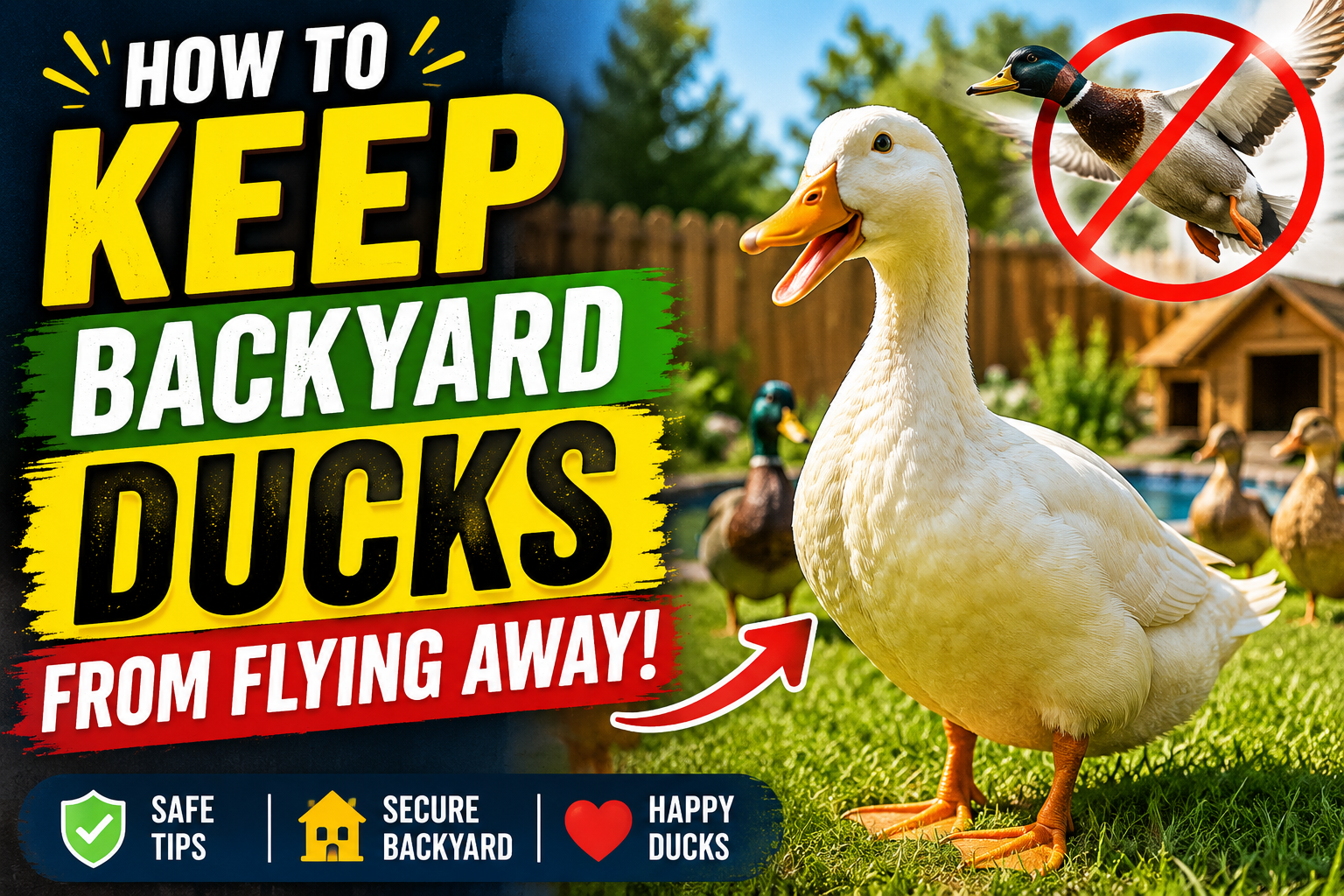
7 Proven Ways to Keep Backyard Ducks From Flying Away
If you are a new owner of domestic ducks, you may be concerned about your backyard ducks flying away. If you are thinking how to keep backyard ducks from flying away, fortunately, most domestic duck breeds will not fly far from their home when their needs are being fulfilled.
By providing adequate food and shelter as well as ensuring that the area is safe for your ducks, you can keep ducks from flying away.
This guide explains practical and humane ways to prevent backyard ducks from flying away while helping them stay healthy and comfortable.
How to Keep Backyard Ducks From Flying Away
These practical and humane methods can help you to prevent backyard ducks from flying away while ensuring they remain healthy and comfortable.
Choose Duck Breeds That Rarely Fly
If you want to keep your ducks from being fly away, you should choose a duck breeds that can’t fly well. The domestic ducks tend to weigh more than their wild relatives, so they will find it harder to fly long.
Some common backyard duck breeds that don’t typically fly include:
- Pekin Ducks
- Rouen Ducks
- Cayuga Ducks
- Swedish Ducks
- Muscovy Ducks
These ducks generally prefer to stay close to source of food and drink, and close to a shelter instead of flying away.
Understand Natural Duck Behavior
Ducks that live at home typically remain in an area that feels secure for them. Domestic ducks will more likely take off due to fear, not having enough to eat, not having a place to sleep and sudden stress from the environment. Once ducks have established a routine that they follow each day, they will be less likely to fly away.
Make a Safe and Comfortable Living Environment
To keep backyard ducks happy it is important that you make their environment safe and comfortable.
Provide a Proper Duck Coop to Keep Them Fly Away
Your ducks need a predator-proof coop where they can sleep safely at night. The coop should have:
To provide your ducks comfortably sleep through the night, they need a safe and predator-proof coop. It means provide a duck coop having:
- Good ventilation
- Clean & Dry bedding
- Enough space to comfortably move around
- Strong doors and metal fencing
If ducks feel less security on their surroundings they are more likely to become frightened and fly away.
Use Secure Fencing
Fence enclosures provide protection and a safe place for backyard ducks and prevent them from wild animals. Generally, domestic ducks can stay safe in fences that are 3 to 4 feet high above the ground. Small gap wire fencing are best to keep ducks avoid from squeezing between the fence bar gaps.
Give Access to Water
Ducks like to stay near water sources, therefore if you provide a duck pond (a plastic pool or a water tub), they will stay there happily. Clean water also helps maintain healthy feathers for ducks and reduces their stress.
How to Train Ducks to Return Home Daily
Ducks will become acclimated to an established schedule and should be easily trained to return their home at a specific time of the day.
Schedule Feedings to Provide Consistency
Schedule feeding will teach your ducks where to feed and the safety of your yard. Feed them at the same place and time every day (i.e., in the evenings). Ducks naturally return to their home, prior to their feeding time.
Keep New Ducks in Secure Enclosure
For a minimum of 2 Weeks new ducks should be live in a secure enclosure before being allowed free to roam. By providing this timeframe, the duck will recognize your yard as their home base.
Prevent Fear and Stress in Backyard Ducks
Scared ducks are more likely to try escaping. Reducing stress keeps them calm and less interested in flying away.
Fear and stress can also contribute to duck escape attempts. Keeping your ducks relaxed decreases the chances to fly away. To keep your ducks safe, you will need to protect them from predators like dogs, cats, foxes, and hawks. These animals can cause a huge amount of fear in ducks.
Even if an animal does not attack, but continue to experience fear from predictable sources, they can fly away from your backyard. They prefer to have a safe place to sleep at night and a calm place will help ducks to feel safe.
Avoid Loud Noises
Ducks can be stressed by loud noises. Noise of construction, fireworks, and loud yelling can cause panic in Ducks, which can increase the chance of Ducks flying away because of sudden stresses. Keeping Ducks in a peaceful area helps to reduce the chances of sudden flight.
Maintain a Healthy Flock
Ducks are social creatures and do much better living in flocks with 2-3 members (or more). When a duck is lonely, it can develop anxiety issues.
Should You Clip Duck Wings to Keep Them Fly Away?
Some backyard duck owners clip one wing to limit their ducks’ flight ability. Wing clipping is optional and should be performed carefully and humanely.
How Wing Clipping Works
Clipping one wing may affect the balance of the duck during flight and will not cause any harm if the procedure is performed correctly.
The wing clipping should mainly be performed on small domestic duck breeds, as it is not necessary for large domestic ducks.
When Wing Clipping May Help
You may consider wing clipping if you have light-weight duck breed, your ducks are always attempting short flights and you have open area around your ducks that allow them to escape easily.
In addition to this, you will need to re-clip wing as their feathers grow back after molting.
Common Mistakes That Make Ducks Leave
Ducks are likely to leave home for certain reasons, some of the following are:
Sheltering Problems
Bad shelter conditions such as wet bedding, overcrowding, or no shade for ducks leads to the possibility of ducks wanting to fly away.
Not Having a Steady Food Source
If ducks do not have a steady and reliable source of food and water they will go out and try to find a food source and create their own habit.
Conclusion
If you want to make sure your domestic ducks will not fly away, you need to ensure their safety, give them comfort, and establish routine activities. In general, domestic ducks like staying close to reliable food, clean water, and a secure shelter. Reducing the chances of your domestic ducks flying away can be accomplished by selecting low-flying breeds, using proper fencing, and creating consistent daily habits.
When ducks feel safe and well cared for, they are more likely to treat your backyard as their home.